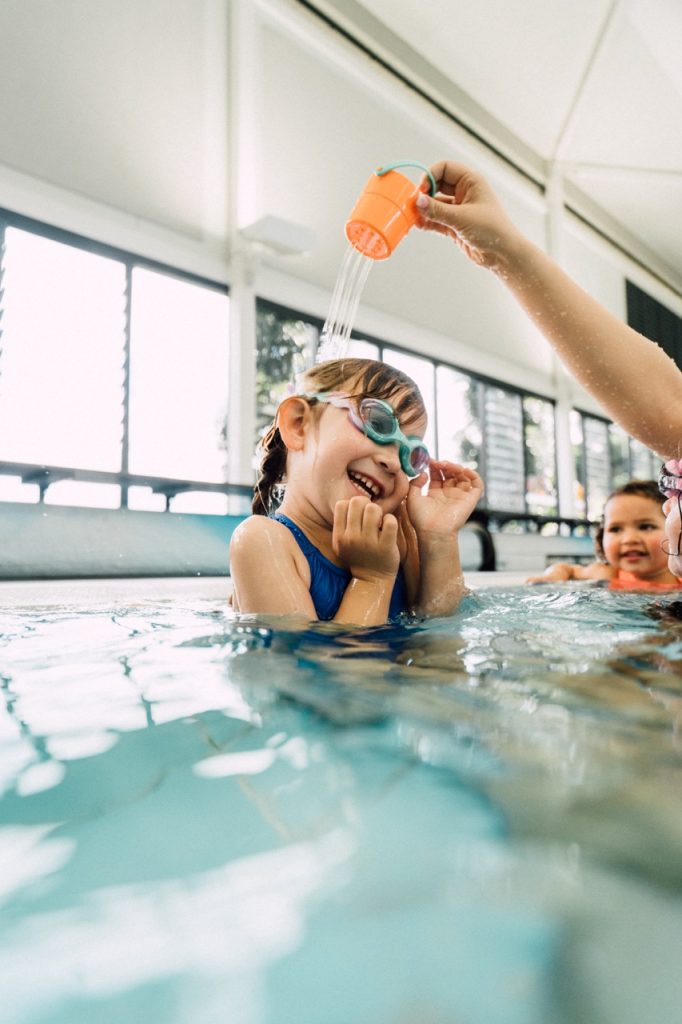
Every child is born to swim.
It’s the idea behind our new Born To Swim campaign, and it’s the thing we’ve believed since the Rackley family opened their first pool at Burleigh Beach Baths. Not that every child will race. Not that every child will love it straight away. Just that swimming is a natural human thing, and with the right support at the right time, every child can learn it.
What we’ve noticed is that the learn to swim journey follows a shape. Not a rigid timeline, and not the same pace for every child, but a recognisable path with five stages along it.
Understanding where your child sits makes a real difference. It helps you know what to expect, what to celebrate, and when a wobble is just a normal part of the process rather than something to worry about.
A quick note on ages. The ranges in this article are a guide, not a rule. Every child’s learn to swim journey is different, and where your child sits depends far more on how long they’ve been swimming and how often than on their birthday. A five year old who started at two and a five year old starting next week are in very different places, and both are exactly where they should be.
Stage one: Splash, from 3 to 6 months
Your baby’s very first experience of water, and it isn’t about swimming at all.
You’re in the pool holding them, and the whole point is comfort. The temperature, the sound, the way water moves and holds them. Gentle floats on their back against your chest. A little water over the shoulders. Learning that a splash on the face is nothing to be alarmed about.
It looks like play, and it should. But underneath it, real things are happening. Babies are building early breath awareness, a sense of safety in the water, and a positive first association that shapes everything that comes after it.
It’s also lovely for you. Warm water, skin to skin, no phone, twenty minutes of nothing but your baby.
What parents notice: how quickly it becomes the calmest part of the week, and how well most babies sleep afterwards.
What helps most: your own calm. Babies read your body language in the water before anything else. If you’re relaxed, they settle faster.
Our Baby Splash sessions are free for 3 to 6 month olds, which makes this a lovely, low pressure way to begin, before continuing their journey into Discovery 1.


Stage two: Explore, usually from 6 months to 3 years
A long stage, and a big one, because your child changes enormously across it.
It starts with water familiarity. Recognising the cues that come before going under, so submersion is never a surprise. Reaching, splashing, kicking, getting used to being moved through the water rather than just held in it.
By the end of it, independence is starting. Your child moves from being held to being supported, and then to short moments on their own. Assisted floats. Kicking with a board. Turning back to the wall and holding on.
The biggest shift in this stage is emotional rather than physical. Your child learns to trust an instructor who isn’t you. That’s a genuine milestone, and for a lot of families it’s the hardest one.
What parents notice: enormous variation week to week. A child who did it happily last Tuesday might refuse this Tuesday. This is developmental, not a sign that anything has gone wrong.
What helps most: letting the instructor lead. It’s tempting to call out encouragement from the side, but children usually settle faster when they’re focused on one voice.
Stage three: Learn, usually from 3 to 6 years
The technical stage, and the longest one for most children.
This is where strokes are built properly. Freestyle with side breathing. Backstroke with a steady kick. Then breaststroke and butterfly as coordination develops. Alongside the strokes come the safety skills that matter just as much: treading water, back floating, safe entries and exits, and knowing what to do if they end up in the water unexpectedly.
Progress here often feels slower than it did in earlier stages, and that catches parents out. Your child isn’t going backwards. They’re refining, and refinement is less visible than a first float.
What parents notice: plateaus. Weeks where nothing seems to change, followed by a sudden jump.
What helps most: turning up. Skills stick when the gap between swimming lessons is short. This is the stage where families who swim twice a week tend to notice the clearest difference, because there’s simply less to re-learn each time.


Stage four: Swim, usually from 5 to 9 years
Your child is a swimmer now, and this stage is about making that real in open, unpredictable water.
Distance and endurance build. Strokes get efficient rather than just correct. Your child learns to swim continuously, to pace themselves, to stay calm when they’re tired, and to survive in the water rather than only move through it.
This is the stage where water safety is genuinely achieved. Swimming a continuous 50 metres and treading water for two minutes are the benchmarks that matter, and they’re both life saving skills. They’re locked in right here.
What parents notice: the temptation to stop. Your child can swim, so swimming lessons start to feel optional.
What helps most: knowing what’s still to come. Swimming a length is not the same as swimming 50 metres without stopping, treading water for two minutes, or staying calm after an unexpected fall in with clothes on. Those come at the end of this stage, not the start, and they’re the ones that matter in a real situation.
Stage five: Race, usually from 8 years and up
Not every child gets here, and that’s completely fine. Stage four is where water safety is achieved.
But for children who love it, Race is where swimming turns into a sport. Squad training. Structured sessions. Starts, turns and finishes. Racing against the clock and chasing personal bests. Some go on to club and state level, and a small number go a great deal further. Rackley swimmers have represented Australia.
What matters more than the medals is what the stage gives them. Discipline, resilience, a training routine, a team, and a sport they can keep for the rest of their life.
What parents notice: the commitment ramps up quickly, in time and in early mornings.
What helps most: letting your child set the pace of their ambition. The ones who stay are the ones who chose it.


Stage one: Splash, from 3 to 6 months
Your baby’s very first experience of water, and it isn’t about swimming at all.
You’re in the pool holding them, and the whole point is comfort. The temperature, the sound, the way water moves and holds them. Gentle floats on their back against your chest. A little water over the shoulders. Learning that a splash on the face is nothing to be alarmed about.
It looks like play, and it should. But underneath it, real things are happening. Babies are building early breath awareness, a sense of safety in the water, and a positive first association that shapes everything that comes after it.
It’s also lovely for you. Warm water, skin to skin, no phone, twenty minutes of nothing but your baby.
What parents notice: how quickly it becomes the calmest part of the week, and how well most babies sleep afterwards.
What helps most: your own calm. Babies read your body language in the water before anything else. If you’re relaxed, they settle faster.
Our Baby Splash sessions are free for 3 to 6 month olds, which makes this a lovely, low pressure way to begin, before continuing their journey into Discovery 1.

Stage two: Explore, usually from 6 months to 3 years
A long stage, and a big one, because your child changes enormously across it.
It starts with water familiarity. Recognising the cues that come before going under, so submersion is never a surprise. Reaching, splashing, kicking, getting used to being moved through the water rather than just held in it.
By the end of it, independence is starting. Your child moves from being held to being supported, and then to short moments on their own. Assisted floats. Kicking with a board. Turning back to the wall and holding on.
The biggest shift in this stage is emotional rather than physical. Your child learns to trust an instructor who isn’t you. That’s a genuine milestone, and for a lot of families it’s the hardest one.
What parents notice: enormous variation week to week. A child who did it happily last Tuesday might refuse this Tuesday. This is developmental, not a sign that anything has gone wrong.
What helps most: letting the instructor lead. It’s tempting to call out encouragement from the side, but children usually settle faster when they’re focused on one voice.

Stage three: Learn, usually from 3 to 6 years
The technical stage, and the longest one for most children.
This is where strokes are built properly. Freestyle with side breathing. Backstroke with a steady kick. Then breaststroke and butterfly as coordination develops. Alongside the strokes come the safety skills that matter just as much: treading water, back floating, safe entries and exits, and knowing what to do if they end up in the water unexpectedly.
Progress here often feels slower than it did in earlier stages, and that catches parents out. Your child isn’t going backwards. They’re refining, and refinement is less visible than a first float.
What parents notice: plateaus. Weeks where nothing seems to change, followed by a sudden jump.
What helps most: turning up. Skills stick when the gap between swimming lessons is short. This is the stage where families who swim twice a week tend to notice the clearest difference, because there’s simply less to re-learn each time.

Stage four: Swim, usually from 5 to 9 years
Your child is a swimmer now, and this stage is about making that real in open, unpredictable water.
Distance and endurance build. Strokes get efficient rather than just correct. Your child learns to swim continuously, to pace themselves, to stay calm when they’re tired, and to survive in the water rather than only move through it.
This is the stage where water safety is genuinely achieved. Swimming a continuous 50 metres and treading water for two minutes are the benchmarks that matter, and they’re both life saving skills. They’re locked in right here.
What parents notice: the temptation to stop. Your child can swim, so swimming lessons start to feel optional.
What helps most: knowing what’s still to come. Swimming a length is not the same as swimming 50 metres without stopping, treading water for two minutes, or staying calm after an unexpected fall in with clothes on. Those come at the end of this stage, not the start, and they’re the ones that matter in a real situation.

Stage five: Race, usually from 8 years and up
Not every child gets here, and that’s completely fine. Stage four is where water safety is achieved.
But for children who love it, Race is where swimming turns into a sport. Squad training. Structured sessions. Starts, turns and finishes. Racing against the clock and chasing personal bests. Some go on to club and state level, and a small number go a great deal further. Rackley swimmers have represented Australia.
What matters more than the medals is what the stage gives them. Discipline, resilience, a training routine, a team, and a sport they can keep for the rest of their life.
What parents notice: the commitment ramps up quickly, in time and in early mornings.
What helps most: letting your child set the pace of their ambition. The ones who stay are the ones who chose it.
Where does my child fit?
Most children don’t sit neatly in one stage. A child might be technically in Learn but emotionally still in Explore, or comfortable in the water well beyond their level. That’s normal.
A few things worth holding onto:
Progress isn’t linear. Plateaus are part of it, and they almost always break.
Age is a guide, not a rule. Time in the water matters far more than birthdays, and children who start later usually move through the early stages faster.
Consistency beats intensity. Regular swimming lessons over a long period do more than a short burst.
The last skills are the ones that count. Swimming 50 metres without stopping, treading water for two minutes and coping with an unexpected entry all sit at the end of stage four.
And if your child doesn’t seem to fit anywhere on this page, that’s worth a conversation rather than a worry. Older beginners, nervous swimmers and children who need a different kind of support all have a place here, and the starting point is simply telling us where they’re at.
Every child is born to swim
Whether your child is splashing in their first session or chasing a personal best, they’re on the same journey. The stages just tell you where they are on it.
Watch our Born To Swim film to see the whole journey in 60 seconds.
Ready to start, or ready for the next stage? Find your local Rackley Swimming venue and book a free welcome session, and we’ll help you find the right fit.
Common questions from parents
What age should my child start swimming lessons?
You can start from 3 months old. At that age it’s about comfort and familiarity rather than skills, and our Baby Splash sessions are free for 3 to 6 month olds. That said, there’s no wrong age to begin. Children who start at five or six move through the early stages faster than younger children do, so a later start is not a disadvantage.
How long does it take a child to learn to swim?
It depends on how old they were when they started and how often they swim. As a rough guide, a child who starts around three and swims consistently will usually be swimming independently somewhere between five and seven. Frequency matters more than anything else. Children who swim twice a week generally move through the stages noticeably faster, because less is forgotten between swimming lessons.
What age should a child be able to swim 50 metres?
Most children reach that point during the Swim stage, somewhere between five and nine. It’s one of the two benchmarks worth aiming for, along with treading water for two minutes.
How many stages are there, and does my child need to complete them all?
There are five: Splash, Explore, Learn, Swim and Race. The first four build water safety, and stage four is where it’s genuinely achieved. Race is optional and it’s for children who want to take swimming on as a sport.
My child has stopped progressing. Is something wrong?
Almost certainly not. Plateaus are a normal part of the Learn stage in particular, where the work shifts from learning new things to refining existing ones. Progress becomes less visible even though it’s still happening. If it’s going on longer than a term, have a chat with your instructor.
Should my child swim once or twice a week?
Once a week works, and plenty of children progress well on it. Twice a week suits families who want faster progression, and it makes the biggest difference during the Learn stage. The shorter gap means skills stick rather than needing to be rebuilt each week.